
Home › Protocol Optimization & Trial Design
Validate I/E criteria against real-world populations, benchmark every protocol choice against 60,000+ curated trials, and cut the amendments that slow recruitment before they happen.
Build eligibility criteria around real patient populations and recruitment potential.

Ground protocol decisions in historical clinical trial insights and real-world data.
Flag recruitment and feasibility risks before they cause amendments or costly delays.
Trial Design runs on Citeline’s single, unified data layer spanning the full spectrum of clinical development, so every result and recommendation stays consistent and grounded in the industry’s best data.
Understand the competitive picture. Identify where to invest and where to compete.
Design protocols real patients can qualify for, grounded in competitive evidence.
Place trials where eligible patients and capable sites meet.
Reach the right patients at the right moment.
Stay compliant and meet critical reporting obligations.
Without a clear view of patient availability and site feasibility, recruitment problems can surface leading to amendments, missed timelines and underperforming sites.
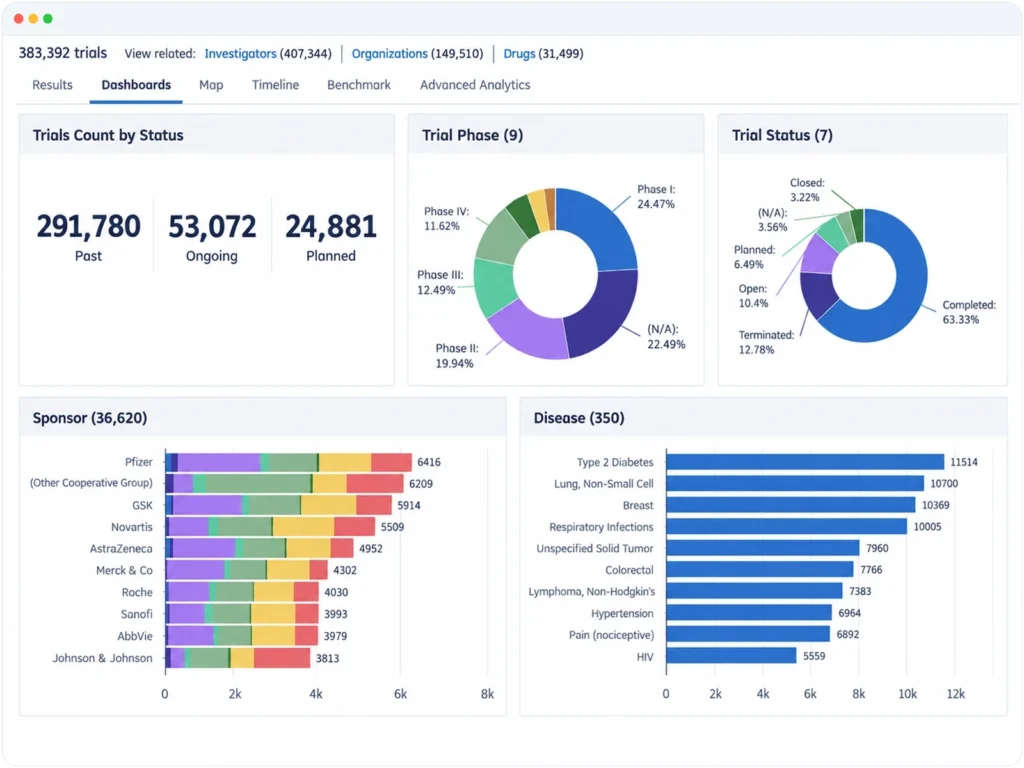
Compare endpoints, eligibility criteria, timelines, and enrollment performance across successful trials.
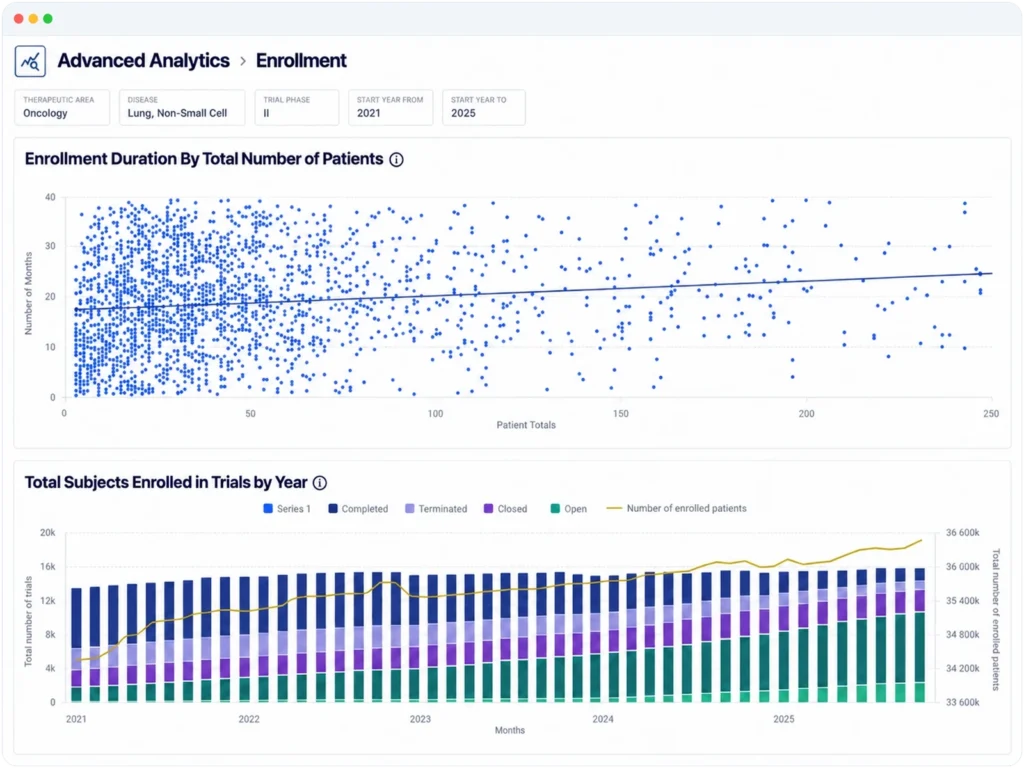
Evaluate enrollment trends, competitive activity, and emerging risks across comparable studies.
The curated intelligence the workflow is built on
Explore
Explore
Explore
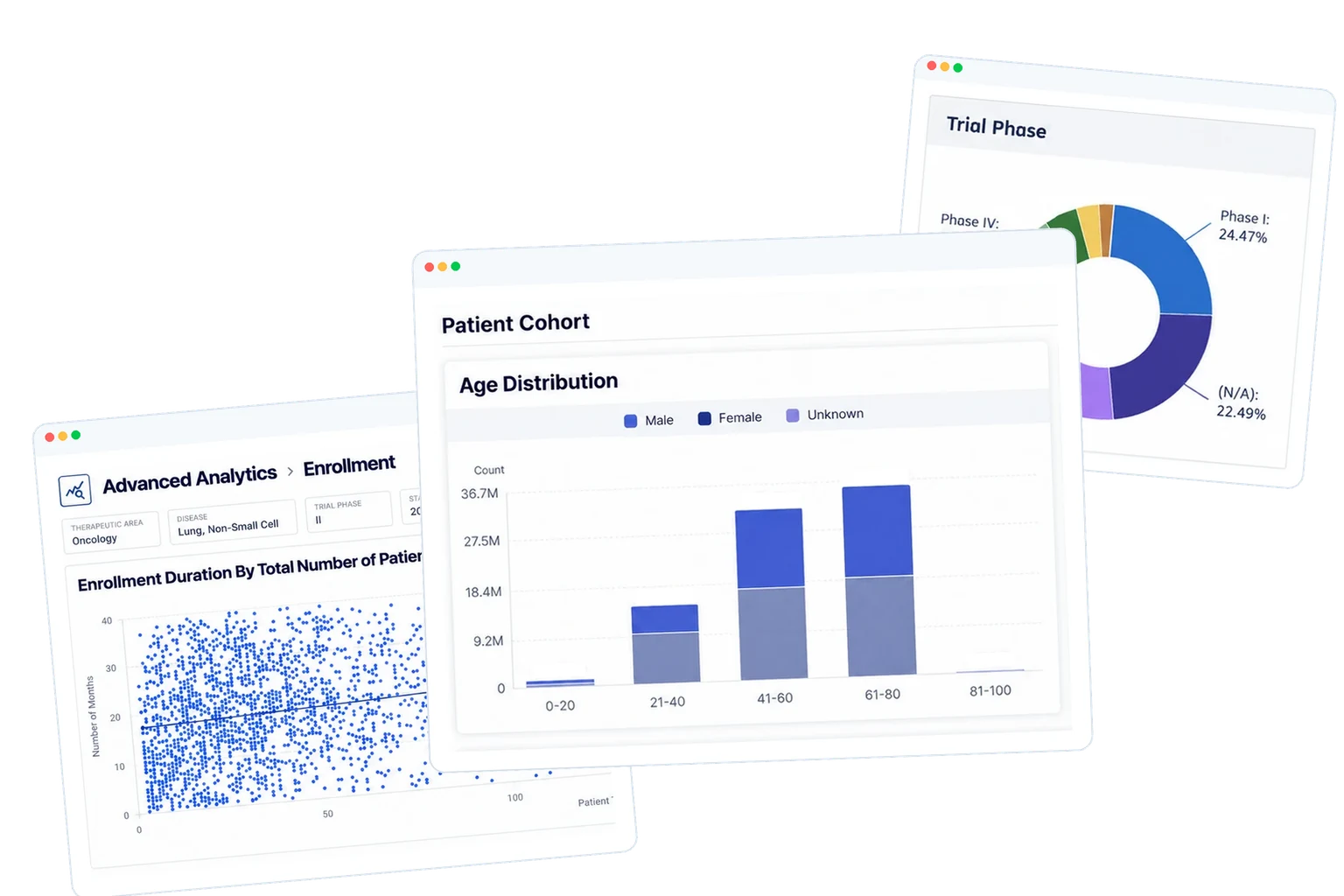
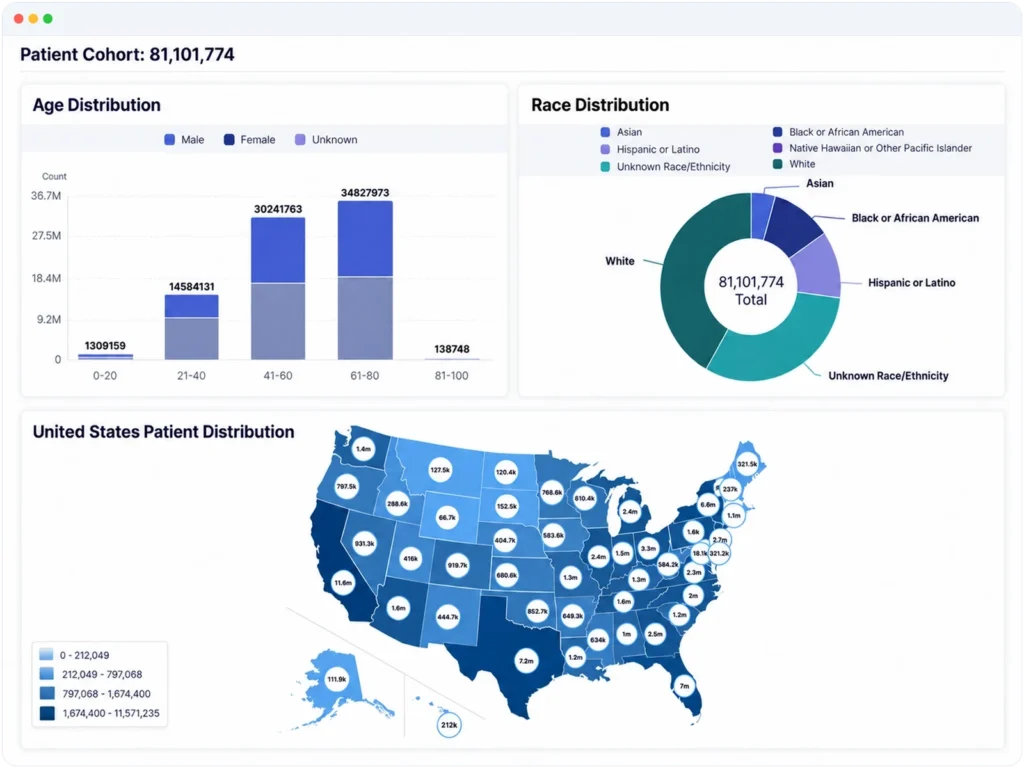
Understand how many patients meet your study requirements.
See how patients move through diagnosis, treatment, and referral.

Identify risks earlier and make more informed protocol decisions.

Analyst-curated intelligence, not raw aggregation. AI supports decisions while your team stays in control.
57%+ more coverage than ClinicalTrials.gov, drawn from sources no public registry captures.

30+ years of analyst-curated trial, site, and patient intelligence.

| The Traditional Approach | The Trial Design Workflow |
|---|---|
| Trial, patient, site and competitive intelligence reviewed separately | Trial, patient, site and competitive intelligence connected in a single workflow |
| Eligibility criteria designed first, recruitability validated later | Eligibility criteria evaluated against real patient populations during design |
| Feasibility assessments built through multiple manual analyses | Feasibility informed continuously throughout protocol development |
| Recruitment risks often discovered after launch | Recruitment risks identified earlier in planning |
| Decisions rely heavily on expert judgment and fragmented evidence | Decisions supported by patient intelligence, clinical data and AI-assisted recommendations |
By identifying recruitment and feasibility risks earlier, Trial Design helps teams make better-informed protocol decisions before study launch.