
Home › Clinical Competitive Intelligence
Follow competitor pipelines across indications, mechanisms, and development stages.
Surface underserved indications, emerging mechanisms, and portfolio gaps.
Evaluate opportunities, prioritize investment, and decide where to compete next.
Connect Clinical Competitive Intelligence with the workflows shaping trial design, site selection, and patient recruitment.
Understand the competitive picture. Identify where to invest and where to compete.
Design protocols real patients can qualify for, grounded in competitive evidence.
Place trials where eligible patients and capable sites meet.
Reach the right patients at the right moment.
Stay compliant and meet critical reporting obligations.
When teams miss early signals, they pursue crowded indications, under-estimate competition, or discover gaps too late to act. The pipeline has never been more complex, and the stakes for getting it wrong have never been higher.
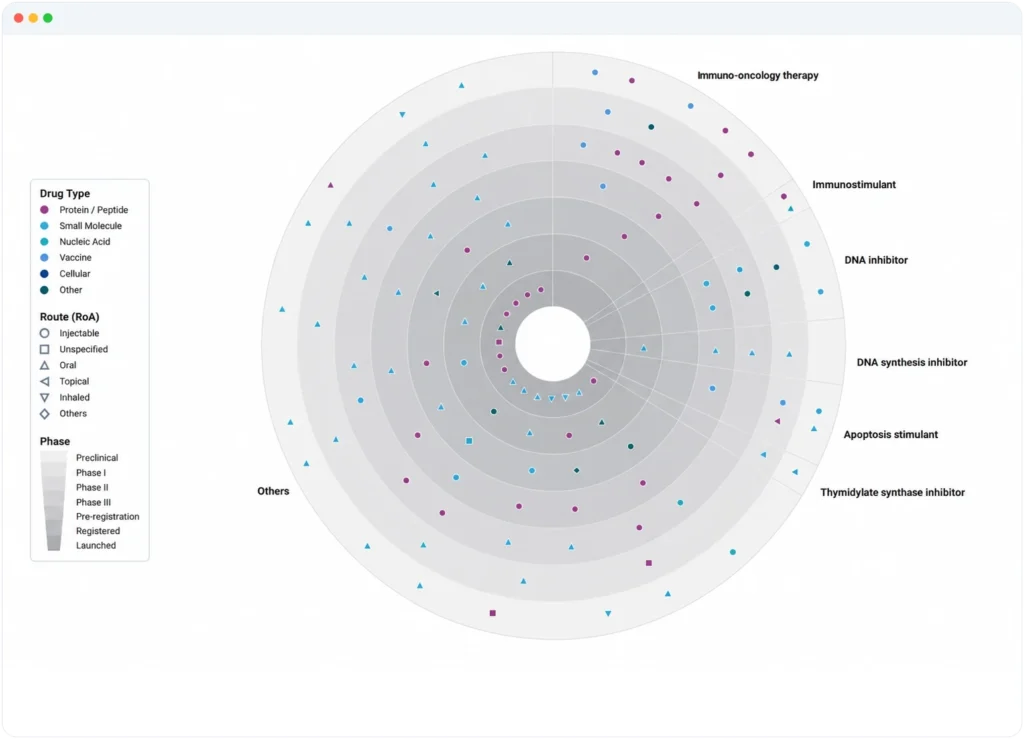
See which companies, therapies, and mechanisms are advancing at every stage. Clinical Landscape maps the competitive picture across development stages so teams know exactly who is doing what, and where the field is heading.
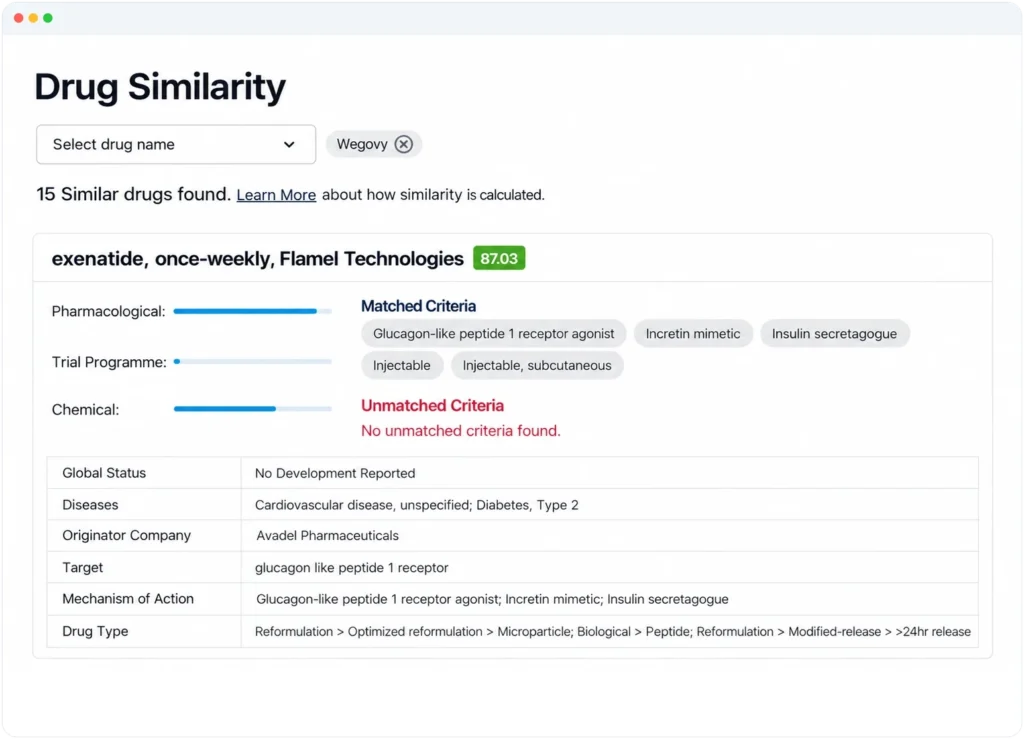
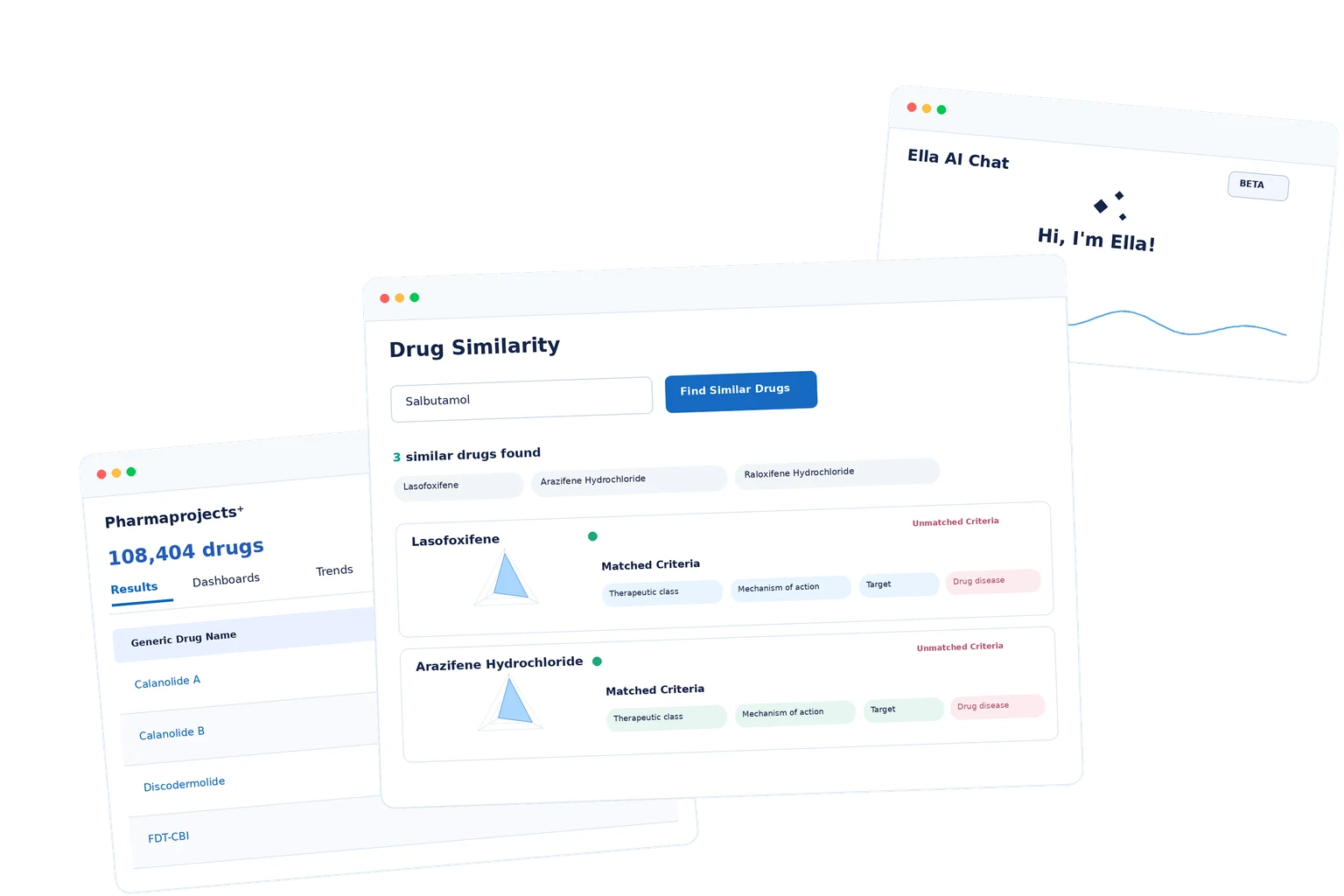
Surface underserved indications and find comparable assets for in-licensing, competitive assessment, and due diligence. Clinical Landscape gives BD&L and strategy teams a complete picture of any therapeutic area, including assets no public source tracks.
Phase progression rates, discontinuation patterns, and mechanism saturation all shift. Clinical Landscape shows how the R&D environment has evolved year on year, so teams can ground strategic decisions in decades of evidence rather than assumptions.

Assets held by companies with no obligation to register publicly. A meaningful share of what's actually in development never appears on CT.gov.

100,000+ profiles include drugs that were discontinued, withdrawn, or abandoned. The full history matters for due diligence and understanding mechanism risk.

Annual snapshots since 1995 with continuous expert curation. 58,000+ data sources, enriched by therapeutically aligned analysts.

Clinical Landscape runs on 40+ years of expert-curated pipeline intelligence. The data is built differently from public registries — manually enriched by analysts, not scraped or unvetted.
Of curated history
Rare disease pipelines with orphan drug designation tracking

Every record is manually enriched by expert analysts. Assets are tracked from preclinical discovery through launch, with coverage of private-company programs no public registry reaches.

Filter by target, mechanism, modality, stage, geography, and sponsor. 1,100+ targets and 1,700+ diseases are granularly indexed so teams can build exactly the landscape they need.

Pipeline intelligence carries through to trial design benchmarks and site selection without switching platforms. The context from a landscape analysis informs every downstream decision.
| The Traditional Approach | With Clinical Landscape |
|---|---|
| Pipeline monitoring built from public registries and manual research | Continuously curated intelligence across 100,000+ profiles, including private-company and pre-publication records |
| Identifying comparable assets requires manual search across multiple sources | Drug Similarity maps chemical, biologic, and mechanistic comparators in a single search, including discontinued programs |
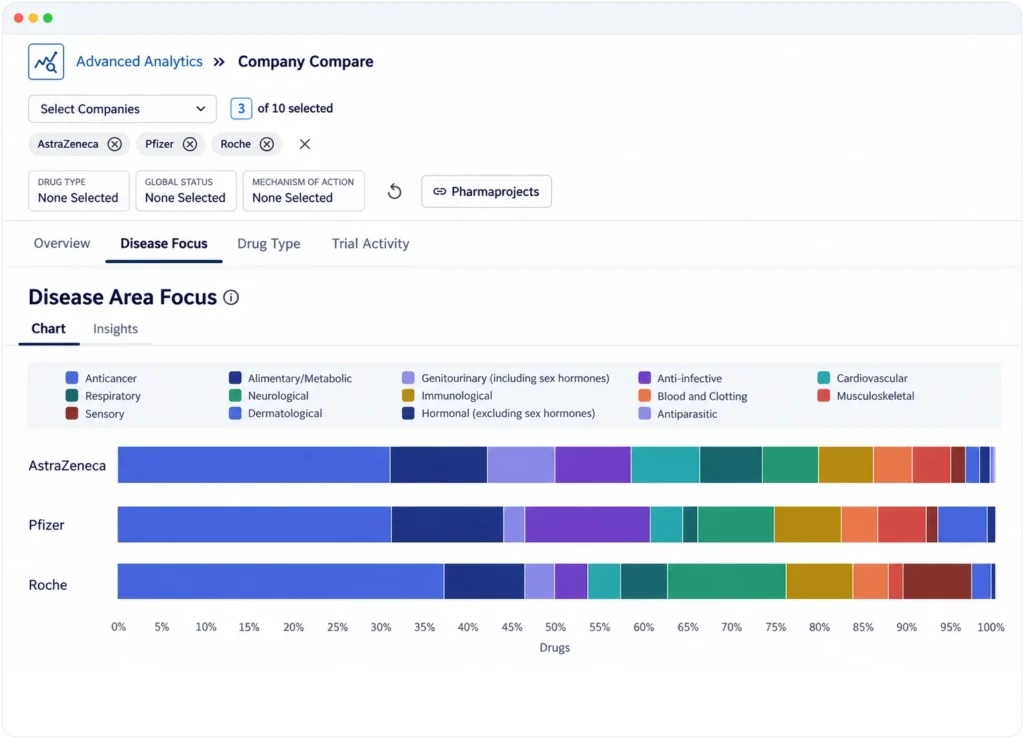
| Competitive analysis assembled manually, taking days to build and update | Company Compare benchmarks active pipelines by disease, stage, and trial activity in seconds |
| Understanding how the landscape has shifted requires separate historical research | Annual snapshots since 1995 show phase progression rates, discontinuation patterns, and mechanism saturation over time |
| Pipeline insights rarely reach the teams planning trials and sites | Landscape intelligence connects directly to Trialtrove and Sitetrove, so context carries through every downstream decision |