Claims, lab, EMR, and notes arrive already linked into one patient view
Unstructured notes read by disease-specific models, validated by MD and PharmD clinicians
The same trusted data at the core of our clinical workflows
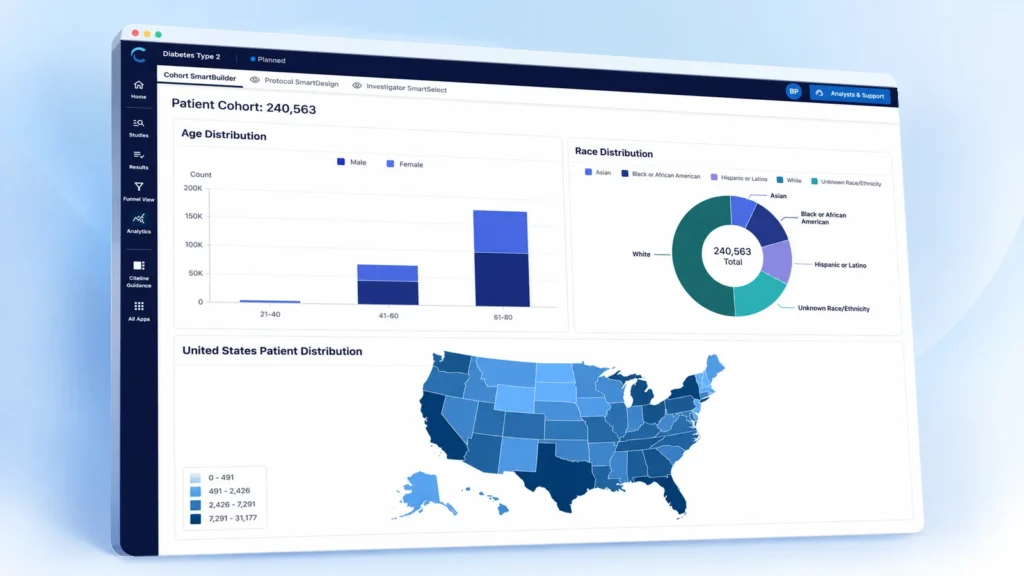
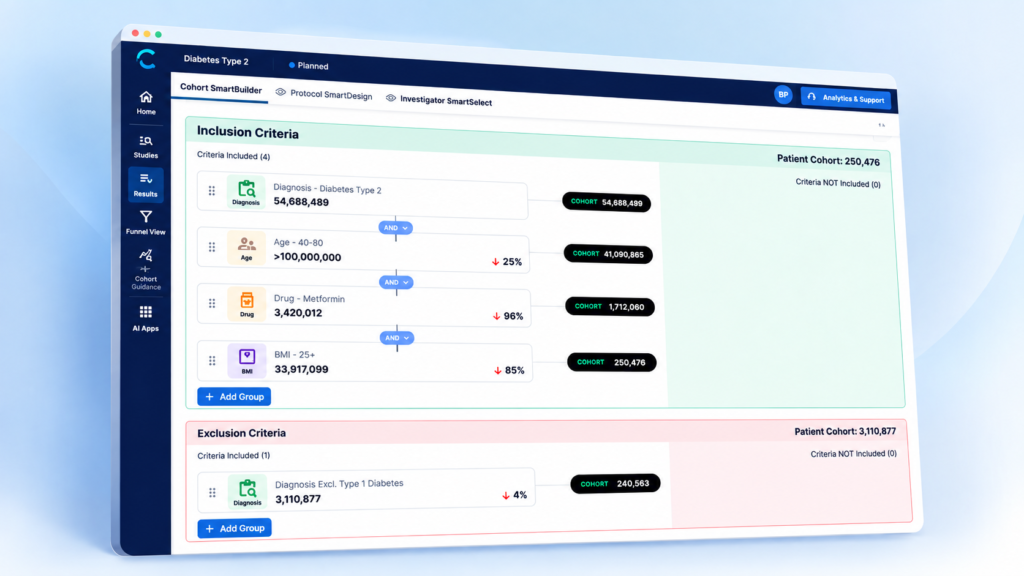
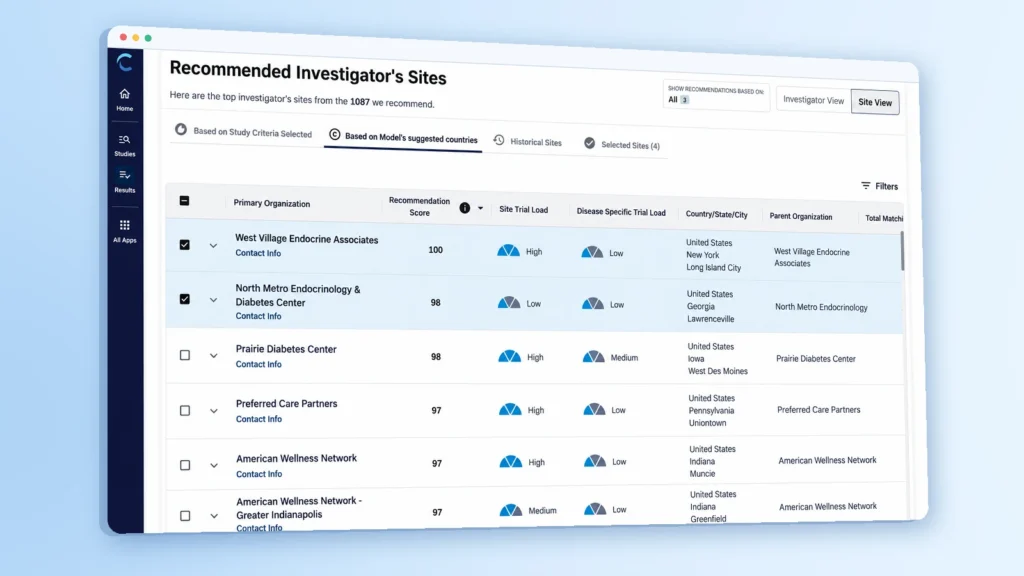
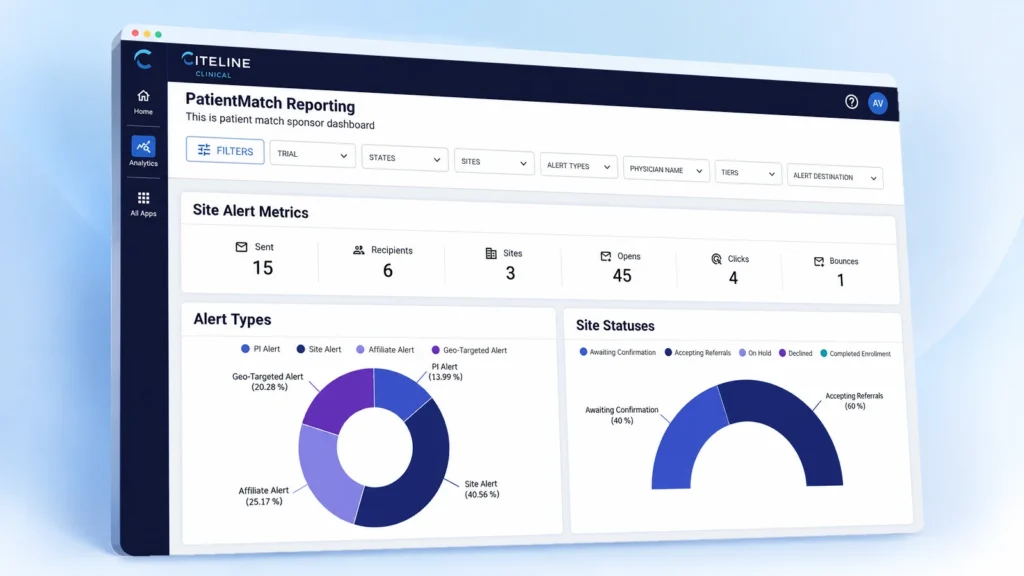

A patient can be followed across claims, lab, and EMR without exposing identity.

Our structured datasets are cleaned, linked, and tokenized to a common token, linking across sources at ~90%.

MD and PharmD clinicians review model inferences from unstructured text before they inform an insight.

Disease-specific language models extract context from notes; interpretable predictive models apply across both.

Lab data under HITRUST-certified, HIPAA-compliant infrastructure with safe harbor and expert determination.

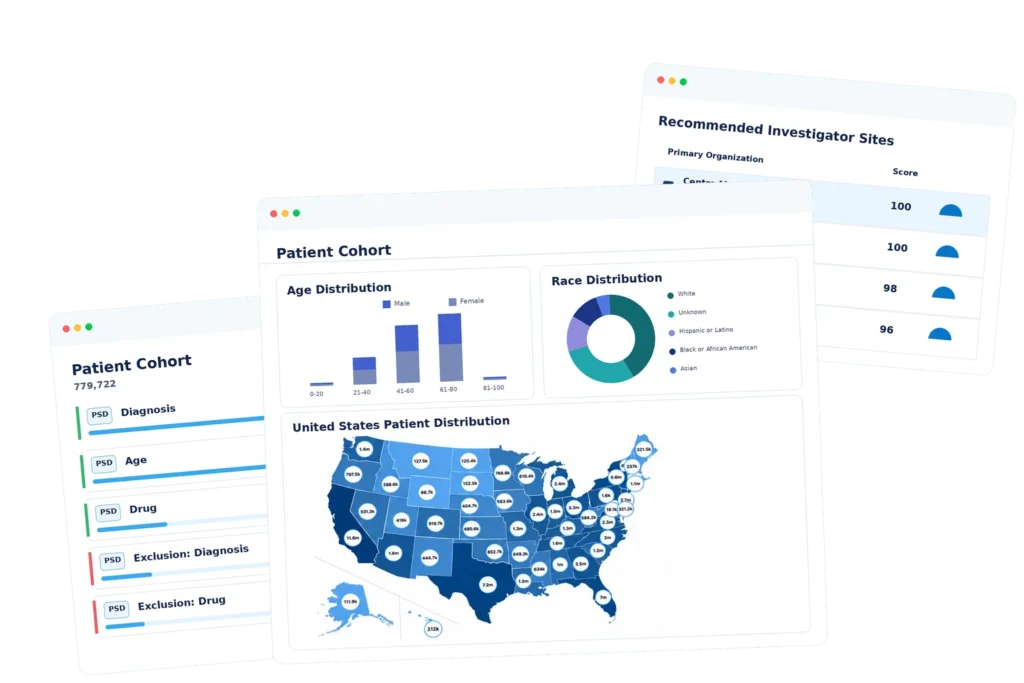
Insight is delivered inside planning, feasibility, and recruitment workflows, with methodology and context attached.

Chief Product & Innovation Officer
Norstella
Kris has built and led healthcare, data and technology products and businesses across GE HealthCare, TeleTracking, MMIT and Norstella. His experience has reinforced the view that technology alone does not create an advantage. AI becomes valuable when it is combined with the right data, industry context and expertise to solve complex healthcare and pharma problems.
What makes Norstella's AI different?
The important distinction is between model intelligence and contextual intelligence. Norstella has spent decades building the context surrounding pharmaceutical decision-making, so its AI operates against an established understanding of the industry rather than relying solely on a general-purpose model. That enables agents to provide recommendations, answers and workflows that reflect how pharma actually operates.
What can pharma teams do now that was not possible two years ago?
AI is moving beyond information retrieval into completing substantial parts of complex workflows and producing strategic recommendations. Teams can reduce the time spent gathering, reconciling and validating information and devote more attention to evaluating options and making decisions.
How can AI accelerate the journey from pipeline to patient?
AI can reduce the time between a question and a decision by connecting clinical, commercial and real-world information. This helps teams evaluate trade-offs, identify opportunities and make decisions more quickly, ultimately reducing development delays.

President, Citeline Strategic Intelligence, Clinical & Regulatory
Norstella
I’ve spent more than 15 years helping pharmaceutical companies plan and operationalize clinical trials, with leadership roles across Novartis, GSK, WCG, Veeva, and now Norstella. Having worked across clinical operations, data and strategic intelligence, I’ve seen firsthand where AI can remove friction from development and where human expertise remains essential.
What makes Norstella's AI different?
It starts with decades of proprietary clinical, pipeline and real-world data already organised around the way drug development works. This provides industry-specific context rather than generic information. Transparent sourcing and expert oversight make it possible for users to understand the evidence behind an AI-generated insight.
What can pharma teams do now that was not possible two years ago?
AI agents can handle many of the manual steps between posing a question and arriving at a usable answer. Fragmented information can be turned into a sourced, evidence-based output in minutes rather than days. AI combined with real-world data also allows teams to test study assumptions, identify patient populations and refine recruitment strategies at much greater speed and scale.
How can AI accelerate the journey from pipeline to patient?
Drug development involves numerous handoffs across systems, teams and decisions. AI can connect those workflows, automate routine analysis and surface relevant information at the right moment, leaving specialists to concentrate on the decisions requiring their expertise.

Chief Real-World Data & Analytics Officer
Norstella
Ted has more than 20 years of experience applying technology to healthcare. At Norstella he leads the use of real-world data to support AI-driven pharmaceutical decision-making. He is a Doctor of Pharmacy with expertise in pharmacy automation, and is also the founder and CEO of Skipta. His approach centres on the principle that AI is only as trustworthy as the evidence underlying it.
makes Norstella's AI different?
Norstella owns proprietary information spanning the drug journey, including clinical pipeline intelligence, regulatory information, market access data, claims, EHR data, unstructured clinical text and linked patient journeys. That provides a different foundation from AI dependent on generic public-web content. Norstella Atlas creates a connected cycle from insight through targeting, triggering, activation and measurement.
can pharma teams do now that was not possible two years ago?
Questions that previously required a lengthy analytics project, specialised data scientists and significant waiting time can increasingly be asked in natural language and answered against billions of healthcare records. Access to this analytical capability can therefore extend beyond small groups of technical specialists to commercial, medical and market access users.
How can AI accelerate the journey from pipeline to patient?
AI can shorten the distance between insight and activation. It can help identify relevant patients and prescribers, determine when action is required and measure what happens afterwards within a connected process.

VP of Thought Leadership
Norstella
Daniel has nearly 20 years of experience spanning drug development, market analysis, consulting and pharmaceutical strategy. This gives him a broad view of what is required to bring therapies to market and where important operational and strategic pain points occur. His focus is on applying AI where it creates genuine value rather than introducing additional technology or complexity.
What makes Norstella's AI different?
The differentiator is the breadth of the underlying pharmaceutical dataset. Norstella can connect information from across the pipeline-to-patient journey, creating insights that would be difficult to generate from isolated datasets. AI extends the value that can be derived from that information.
What can pharma teams do now that was not possible two years ago?
One major advance is the ability to understand how patients appear in real-world healthcare and translate this into more effective targeting. AI can help bridge the gap between the controlled environment of a clinical trial and the much less structured reality of patient treatment.
How can AI accelerate the journey from pipeline to patient?
Trial design, portfolio investment and market access decisions all consume substantial time. AI can help organisations make these decisions using a broader evidence base and do so more quickly, supporting faster development and potentially wider access to successful therapies.

SVP, AI & Life Sciences Solutions
Norstella
Rahul is a computational scientist with around two decades of experience extracting useful signals from complex datasets, from proteins and molecular systems through cancer genomics and unstructured clinical records. At Norstella he has applied this experience to production AI that extracts clinically relevant information from unstructured notes and supports disease-specific datasets, predictive triggers and patient-identification capabilities.
What makes Norstella's AI different?
Two things: data and people. Norstella combines multimodal real-world data such as clinical notes, EHR, claims and genomics with data scientists, engineers, clinical specialists and human-in-the-loop validation. AI is therefore developed against deep healthcare information and evaluated using expert-reviewed samples rather than operating without domain oversight.
What can pharma teams do now that was not possible two years ago?
Teams can identify relevant patient populations and characterize disease progression using clinical information buried in unstructured and multimodal data, at population scale and close to real time. Questions that previously depended on manual chart review or retrospective studies can increasingly be answered on demand.
How can AI accelerate the journey from pipeline to patient?
Richer real-world datasets and advances in LLMs and agentic AI make it possible to identify signals and assemble complex insights much faster. Domain expertise remains necessary to direct these technologies appropriately and ensure outputs are reliable enough to support pharmaceutical decisions.

Head of Product, Clinical Portfolio
Citeline
Christina leads product across Citeline's clinical and regulatory intelligence portfolio. She has more than 15 years of product experience across education technology and life sciences, and joined the organisation that ultimately became Citeline when it was still a small startup. Her earlier sales experience shaped a product philosophy centred on staying close to customers and solving the problems they actually face. Her current work combines Citeline's long-established trial, site and drug intelligence with AI to improve clinical planning, recruitment and execution.
What makes Norstella's AI different?
Norstella AI is purpose-built for life sciences rather than a general-purpose model adapted after the fact. It is embedded in workflows such as protocol design, patient feasibility, site selection and investigator selection. Its foundation includes more than four decades of global drug R&D information and hundreds of thousands of clinical trials, and trial intelligence can be connected with real-world patient information through NorstellaLinQ. That creates a connected view across trials, sites, investigators and actual patient populations. Traceability is another important distinction: forecasts, protocol recommendations and site recommendations can be tied back to the underlying evidence.
What can pharma teams do now that was not possible two years ago?
Two changes stand out. Precision: recruitment can become proactive, with AI models evaluating real-world information against trial requirements, identifying potentially appropriate patients and supporting engagement with treating physicians or investigators earlier in the patient's treatment journey. Foresight: trial, site, investigator and real-world patient information that traditionally sat in separate systems can now be combined, so AI can model scenarios, forecast outcomes and help teams evaluate study-planning decisions.
How can AI accelerate the journey from pipeline to patient?
AI can compress labour-intensive planning activities such as protocol design, feasibility, site selection and recruitment. It can also make trial discovery and eligibility easier by translating between natural-language questions and complex medical terminology or coding. Speed must be combined with trust: subject-matter experts continue to curate the underlying information and review and improve the models.

Senior Vice President, Data Science
Norstella
Geoff trained as an aerospace engineer and has spent roughly a decade building data-science teams across financial technology, vehicle tracking and, more recently, pharma. His interest centres on using advances in data science to improve real-world decision-making. Within life sciences, that translates into helping organisations discover therapies and improve patient access.
What makes Norstella's AI different?
The breadth and quality of Norstella's datasets are central to its approach, because AI performance is constrained by the information available to it. Norstella also has expertise spanning generative AI and more traditional data-science disciplines, providing a broader technical toolkit.
What can pharma teams do now that was not possible two years ago?
First, speed. Generative AI, improved search and better visualization allow the same teams to investigate questions that previously would have been deprioritized because of limited capacity. Second, new analytical capability. Connecting datasets too large and complex for manual analysis can reveal patterns that previously could not practically be found, such as applying AI to very large volumes of physician notes and other real-world information.
How can AI accelerate the journey from pipeline to patient?
AI can influence multiple stages: clinical trial planning, site and investigator recommendations, protocol optimization, enrollment, commercial forecasting, development timelines, market access and launch planning. AI assistants can also perform analysis and produce targeted reports supported by underlying data.

Chief Clinician, Clinical & Regulatory Strategic Intelligence
Citeline
Madeline is a Doctor of Health Science with a Master of Medical Science, and holds a Clinical Research Coordinator certification from the Association of Clinical Research Professionals. Before joining Norstella she spent ten years managing and conducting academic and commercial research in hospitals and clinics, helping lead the largest early-onset Alzheimer's studies globally and launching a cardiovascular centre's first surgical device trial. She specialises in neurological research with broad experience across disease areas and a particular interest in oncology, and now combines clinical and real-world data expertise to shape the solutions customers and their patients rely on.

VP, Clinical Solutions
Citeline
Claire brings more than three decades of clinical operations and development experience across pharma, biotech and CROs. She joined Norstella in 2024 and oversees solution consulting teams across Citeline, guiding the creation of both bespoke and off-the-shelf clinical solutions. Her role runs in two directions: tailoring solutions for customers, and making sure the voice of the customer shapes what product teams build and how it reaches the market. Increasingly that includes custom services for clients who need a tailored answer rather than a product.

AI Solution Architect
Citeline
Aleksandra is a clinical scientist by training whose early work in hospital-based mental-health environments showed her the impact of disconnected information and tools. She later worked in large pharma developing clinical trial endpoint-monitoring solutions, and subsequently with real-world information combining claims, EHRs and clinical notes. At Norstella she works with customers to connect information environments and make complex datasets easier to use when developing new treatments.
What makes Norstella's AI different?
Data and domain expertise are the primary advantages. Norstella spans clinical intelligence, regulatory information, news and insights, commercial intelligence and multiple forms of real-world data, and connecting these sources can provide a more complete view of patients, providers, investigators and markets. That data foundation is supplemented by analysts and scientists with therapeutic, clinical and pharmaceutical expertise who help ensure information is appropriate for the intended use.
What can pharma teams do now that was not possible two years ago?
Unified data environments allow pharmaceutical companies to connect their own clinical and operational information with third-party sources more effectively. This makes it possible to develop AI and machine-learning applications with greater precision and at enterprise scale rather than constantly working around isolated infrastructures and data silos.
How can AI accelerate the journey from pipeline to patient?
Different AI techniques suit different problems. Graph neural networks may be useful in discovery, while natural-language processing can help interpret unstructured payer or policy information. Large language models are particularly important for democratising access to data: experts can express questions using familiar clinical terminology while AI translates those questions into the appropriate underlying data concepts and coding structures.

Vice President, Platform & Agent Operations
Norstella
Whitney has more than 15 years of experience building healthcare and life-sciences data and analytics products. Her perspective is that AI enables organizations to rethink the underlying operating model of a data platform rather than simply adding AI as another product feature.
What makes Norstella's AI different?
Norstella is not approaching AI as a collection of isolated point solutions. The aim is to introduce agents across a connected data platform spanning the commercial journey, allowing workflows to operate across information domains and at a scale individual tools cannot easily provide.
What can pharma teams do now that was not possible two years ago?
Agents can synthesize signals from areas such as market access, competitive intelligence and real-world data in minutes rather than weeks. The limiting factor shifts from the availability of analysts towards how effectively an organization can orchestrate the right agents against its questions.
How can AI accelerate the journey from pipeline to patient?
Agents can shorten the interval between identifying an insight and acting on it. The main opportunity is not faster reporting or faster collection of information, but faster decision-making while the opportunity to act still exists.

Lead, Solution Engineering
Norstella
Kieran began his career at IQVIA delivering brand and competitive-intelligence solutions to large pharmaceutical companies. He experienced the transition from traditional business intelligence towards self-service reporting, and now focuses on making mastered pharmaceutical information accessible through customers' AI-enabled tools. A central theme of his work is democratising access to information so insights are not restricted to technical specialists.
What makes Norstella's AI different?
The differentiator is not simply the model but the curation of the underlying information. Aggregating content is relatively straightforward; resolving, interpreting and maintaining complex pharmaceutical information is much harder. Norstella subject-matter experts have spent decades understanding elements such as drug development histories, true trial statuses and competitor pipelines, and that curated knowledge becomes part of the foundation used by AI.
What can pharma teams do now that was not possible two years ago?
Access to sophisticated pharmaceutical information no longer has to depend on users knowing where data resides or how to construct specialist queries. With trusted data and natural-language AI interfaces, many more users can interrogate the information directly. This changes the meaning of data literacy: technical query skills become less important, while asking useful questions and critically evaluating the answer become more important.
How can AI accelerate the journey from pipeline to patient?
The development journey consists of repeated decisions: which indication to prioritise, where competitive white space exists, how to design a trial, when to engage payers. Historically much of the time surrounding those decisions has been spent gathering evidence. Agents can perform more of that evidence-gathering in the background, allowing experts to devote more time to judgement and decision-making.