
From patient insight to patient enrollment

Turn patient intelligence into recruitment action, connecting the right patients and HCPs to your trials.

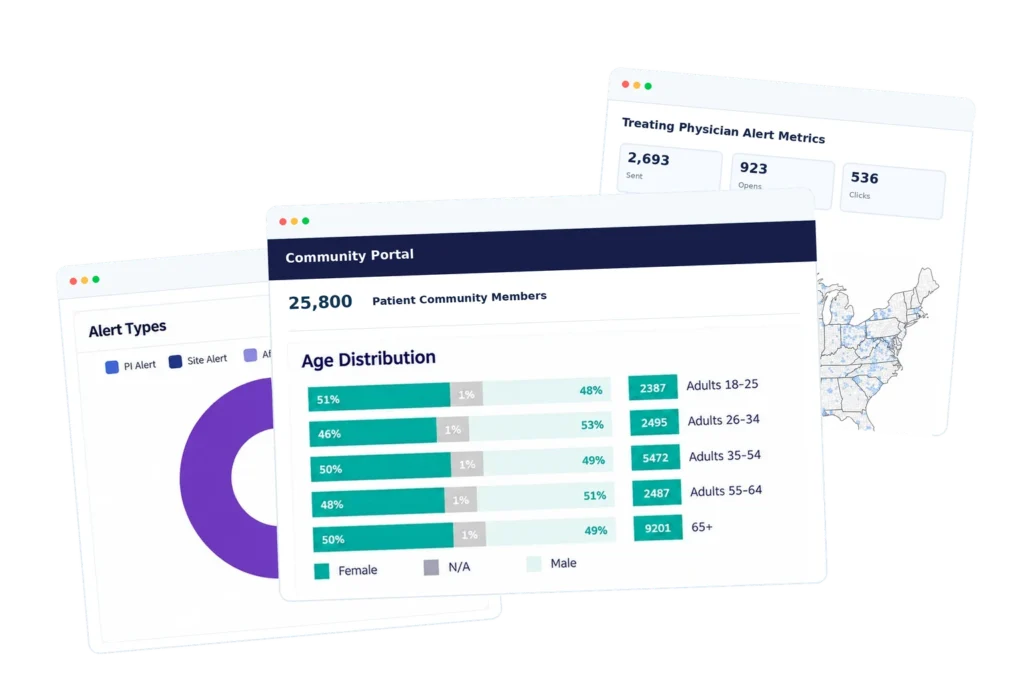
Dashboard illustration showing a community portal’s patient age distribution, alert types, physician metrics, and geographic map.

Build a smarter path to patients

Patient Strategy & Recruitment brings together patient intelligence, precision identification and targeted activation to reach and enroll the right patients.
''

Define the patient landscape

Size and locate eligible populations, map referral pathways and see how patients access care.

''

Build your patient access strategy

Connect patients to the providers and sites that serve them and identify high-volume treating HCPs.
''

Activate protocol-matched patients

Identify matched patients earlier and reach them through targeted HCP and patient outreach.
The Clinical Intelligence Platform

Patient strategy is at the heart of every trial planning decision

Connect patient data, feasibility and recruitment to improve enrollment and reduce recruitment delays in one connected workflow.
Citeline workflow diagram Five workflows around a central Citeline Data & APIs hub. CompetitiveIntelligence ProtocolOptimization SiteSelection Patient Strategy& Recruitment Regulatory& Disclosure CitelineData & APIs Patient Intelligence Agentic Workflows

Competitive Intelligence

Understand the competitive picture. Identify where to invest and where to compete.

Protocol Optimization

Design protocols real patients can qualify for, grounded in competitive evidence.

Site Selection

Place trials where eligible patients and capable sites meet.

Patient Strategy & Recruitment

Reach the right patients at the right moment.

Regulatory & Disclosure

Stay compliant and meet critical reporting obligations.

Why it matters

The numbers behind slow enrollment

Most enrollment delays are predictable. The patient population exists, the sites are open, and the protocol is finalized. The gap is in connecting them efficiently.
53%
of studies had extended enrollment timelines
41%
of activated investigative sites under-enroll against their target
11%
of activated sites enroll zero patients
37%
increase in enrollment duration from first to last patient visit, 2010–2020
Sources: Tufts Center for the Study of Drug Development (Tufts CSDD), 2012 and 2024.
Patient Strategy & Recruitment in practice

What you can do with Patient Strategy & Recruitment

Build a trial presence patients can find and trust

Give patients, caregivers, and HCPs the information they need, with a branded, plain-language digital presence covering your entire trial portfolio.

  • Centralize your full portfolio on one sponsor-branded site
  • Intuitively match and prequalify patients for relevant trials
  • Live sync with ClinicalTrials.gov, no manual updates needed

Reach the HCPs and patients who matter to your study

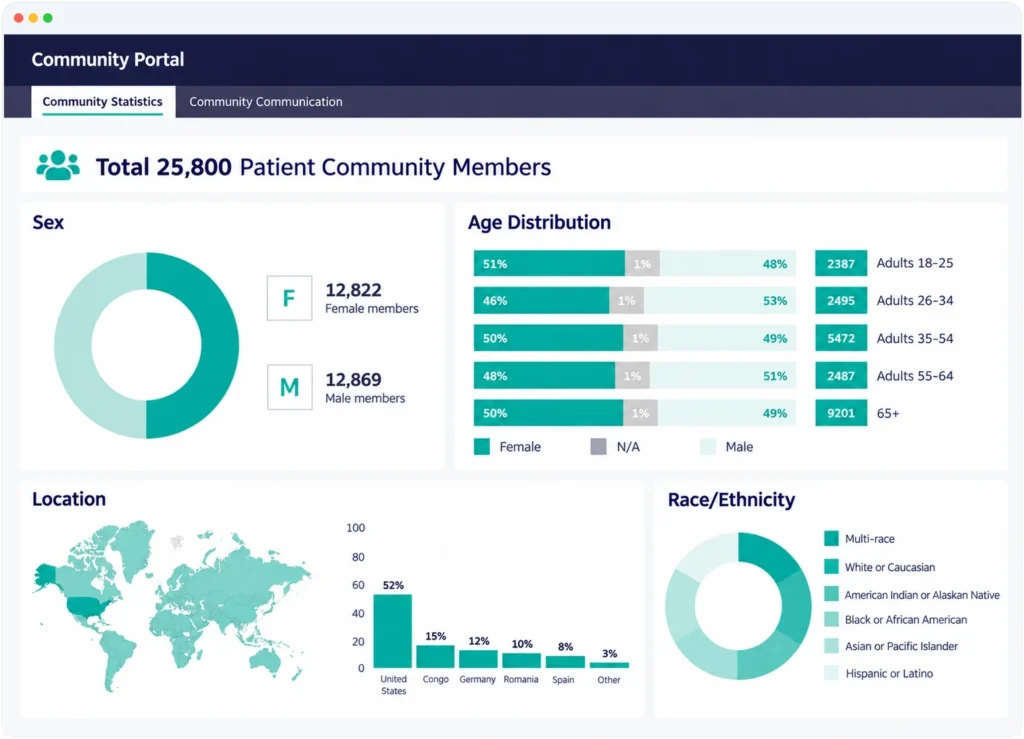
Build a community around your portfolio and increase awareness among the physicians treating your target population, turning interest into intent before a site ever contacts a patient.

  • Secure community portal for patients to follow and join studies
  • Outreach to HCPs treating your target population
  • Timely notifications to turn community awareness into referrals
Community portal dashboard showing patient demographics: sex, age distribution, global location, and race/ethnicity for 25,800 members.

Reach the right patients through the right channel

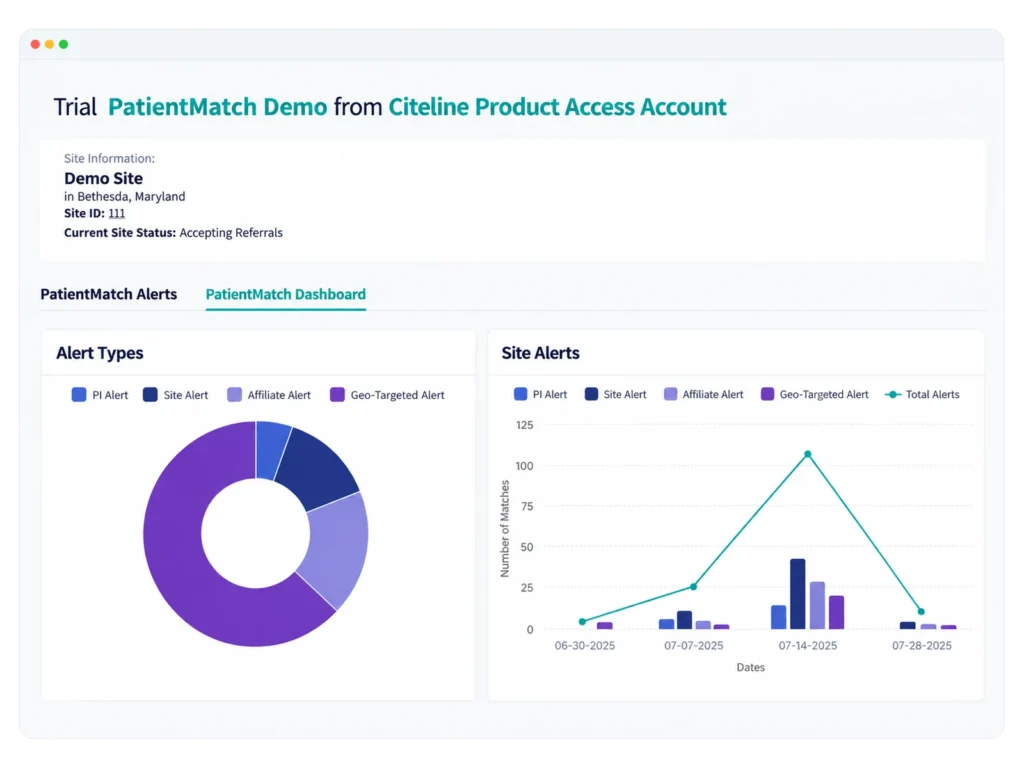
From precision identification for complex protocols to broad network recruitment for studies that need volume, Citeline’s enrollment solutions connect identification to activation, so matches become enrollments.

  • Never miss a relevant patient for your study
  • Cut down on the volume of patients to screen
  • Get the full picture with connected data assets covering biomarker-driven, rare disease, and oncology protocols
Citeline PatientMatch dashboard showing alert-type donut chart and site alerts by date for a demo site in Bethesda, Maryland.
Products

The full Patient Strategy & Recruitment product suite

Every product sits on Citeline’s Patient Engagement & Recruitment platform and draws on this shared patient data foundation spanning education, engagement, and precision recruitment.
DATA Foundation

Patient Intelligence

Norstella, Citeline’s parent company, provides real-world patient data powered by NorstellaLinQ, sizing the eligible population, mapping referral pathways, and identifying the providers treating your target patients across claims (300M+ US lives), lab results (500M+ diagnostic results per month), EHR (62M US lives), and the Skipta network of 2M+ providers.

Data

The data foundation behind it all

Citeline’s Patient Engagement & Recruitment solutions draw on one of the largest connected real-world data assets in clinical research, giving teams the breadth and depth to find, engage, and enroll patients that other approaches miss.
300M+
US lives across claims data
500M+
Diagnostic results per month
62M

US lives in EHR data across 500+ hospitals and health systems

2M+

providers in the Skipta network

''

Built by clinical SMEs

Every algorithm is built by Citeline's in-house clinical experts, so the logic behind each match can be explained and defended.

''

EHR-agnostic and scalable

Deploys across 500+ hospitals and health systems and connected to 3 of the top 4 national reference labs, with no integration constraints or single-system bias.

''

Patient privacy by design

All patient information is de-identified before reaching sites. Alerts contain only the clinical signals relevant to eligibility.


How it compares

From reactive screening to proactive enrollment

Most recruitment programs start only when the sites are open. Citeline connects patient insights to the workflow earlier, so the groundwork for enrollment is laid before the first alert is sent.
Traditional Approach Patient Strategy & Recruitment Workflow
Patient population sized by assumption or historical estimates Eligible population sized and located against real-world data, so site and country strategy reflects where patients actually are
Recruitment strategy defined after site activation Patient access strategy built upstream, connecting recruitment to feasibility rather than starting from scratch at site activation
Sites receive unfiltered patient lists to sort through manually Sites receive only de-identified, protocol-matched alerts, with no manual chart review and no unqualified referrals
Screen-fail rate emerges as a problem after recruitment starts Precision matching means lower screen-fail rates from the first alert, not after the problem has cost time and budget
No centralized view of recruitment performance across sites, channels, and programs One platform gives sponsors, CROs, and sites near real-time visibility into the full referral funnel, from alert to randomization
Generic data sources with limited clinical depth and no in-house validation NorstellaLinQ real-world data across claims, labs, EHR, and clinical notes, with Citeline's clinical SMEs building and validating every algorithm
latest resources

Go deeper on patient strategy & recruitment

A female doctor in a white coat with a stethoscope sitting at a desk, while a female patient in an orange top sits across from her, holding her hands near her chest.
Article

Citeline’s Patient Recruitment Pulse – October 2026 Edition

Hand selecting a glowing digital profile card among multiple candidate resumes displayed above a laptop keyboard.
Customer Story

The Power of Partnership: Pivoting a Plus for Recruitment Project

Article

The Challenges of Recruiting for Pediatric Trials

Pricing

Speak with our team about how this workflow fits your recruitment strategy

Whether you’re planning a study, rescuing one behind timeline, or building a long-term recruitment program, the right setup depends on your trial, your sites, and your population.

FAQ

Frequently Asked Questions

This approach is for clinical operations, patient recruitment, feasibility, medical affairs, and marketing teams at sponsors and CROs who want to build smarter recruitment strategies, from early patient landscape analysis through to site activation and patient enrollment.
The workflow covers the full journey from patient education and community engagement through to precision patient identification and enrollment, underpinned by real-world patient data and supported by Citeline’s in-house clinical experts.
Yes. Patient identification and alerting can be deployed at any point during a trial, including mid-study when enrollment is below plan. The algorithm is built from current protocol criteria and the alert network is live within weeks. It can complement existing site efforts rather than replace them, extending reach into patient populations not already visible to open sites.
Sites receive de-identified, prescreened alerts for patients who already match the protocol, rather than unfiltered lists to sort through manually. That means less chart review, fewer unqualified referrals, and more time spent on patients who are genuinely likely to enroll. Reporting dashboards give sites visibility into where matched patients are in the care network, so follow-up is targeted rather than reactive.
All patient information is de-identified and tokenized before reaching sites or any Citeline team member. Sites receive only the clinical signals relevant to protocol eligibility, with no personally identifiable information. Any direct patient outreach is conducted by Citeline’s lab partner using compliant outreach processes.
Get started

Speak to the Patient Strategy & Recruitment team

Tell us about your trial and we’ll show you how to build a recruitment strategy around the patients who are actually out there.

This site is registered on wpml.org as a development site. Switch to a production site key to remove this banner.