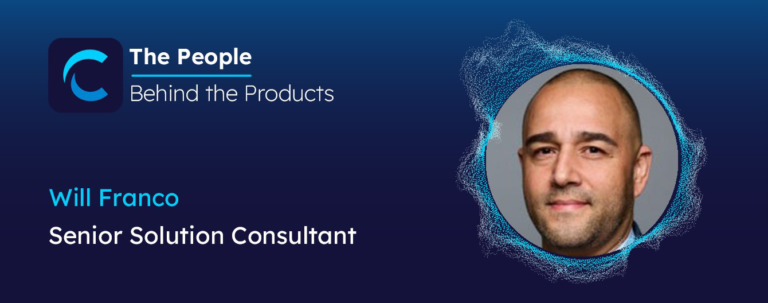
Will Franco serves as a bridge between the client and the rest of the organization. Find out how he came to Citeline, what he does on a day-to-day basis, and what he’s working on now.
My role is supporting sponsors and CROs with their patient recruitment and engagement challenges to help scope the objectives that they have with their specific trials and support them at every step, from feasibility all the way to the enrollment of patients. That’s the objective of my role, but internally I’m basically a bridge between the client and the rest of the organization. I sit with those teams to help discover the needs of a client or understand exactly what they are trying to achieve and then coordinate internally to be able to deliver a solution tailored to these specific needs.
Unlike many of the people I’ve worked with in the clinical research industry, who come either from research or working specifically with clinical data solutions, I started my career in the military. I was a career Marine; I served eight years and started my career working in talent development and human resources. I was always very keen on technology; I always liked innovation and finding ways we can improve processes internally to make things go much faster and to be more efficient and streamlined.
The military gave me a strong foundation of working with people. It’s an environment where you don’t have the option to quit. You have to adapt. You have to work really well with teams across multiple departments. The military gave me the grit, discipline, and cross-functional skill set to adapt quickly and work effectively across different teams and challenges.
From there I transitioned to work with technology. In both my undergraduate and master’s studies, I focused heavily on firm internationalization and strategies to help companies expand into global markets. I had the opportunity to work for a leading cement manufacturing company, an experience I’m extremely grateful for. I was hired to support the company’s internationalization efforts and was selected to participate in an SAP training program, where I eventually became an internal SAP consultant supporting global implementations across South America, the United States, the Caribbean, and Central America. I worked closely on designing and implementing business processes within SAP’s sales and distribution modules, while also partnering heavily with the organization’s finance operations. That experience became a critical foundation for my transition into the technology space, as it gave me exposure to both the operational and technical sides of the business.
I then went on to work as an account executive. So being in sales, selling HR and talent development technology, learning development technology, that’s how I came to the industry. I was selling technology to an organization providing services to the pharmaceutical industry. Before COVID, we’d heard of clinical research and trials, but it wasn’t something people were very well aware of until they started talking in the media about the vaccines, clinical trials. I just became fascinated with everything about research and started digging into research and the process of bringing a drug to market. By the time I had to present to the executive team at this company to sell the technology, I sounded like I came from the industry because I had spent three to four months just reading about everything related to the industry.
I ended up being scouted from that project to help drive the adoption of their technology in clinical research sites. I was supporting clinical research sites not only with their technology but aligning their internal processes to that technology. So I became very embedded in the way sites were operating and how they managed a clinical trial all the way from the proposal procurement piece to getting a trial.
I had to learn how to read a protocol, how to understand a schedule of activities, understand in depth what the inclusion/exclusion [I/E] criteria were. Plus, I learned all the components of the research and then every phase of the clinical trial process from prescreening a patient all the way to randomization and providing the documenting source data and bringing to the EDC [electronic data capture] and all the end processes.
Eventually the opportunity came to join Citeline. I think all the experiences from working in the military and that cross-functional, mission-first attitude has contributed to my success in helping our clients. And everything else as well — the complexity of implementing technology and being a consultant in an organization to understand exactly what is needed to match a solution to a specific problem — has helped me better support our clients.
One of the challenges we face daily for the solutions consulting team is multiple stakeholders with different needs and challenges in a project we’re working on. This especially happens when we’re working with very large pharma companies where they bring 10 to 15 people into the conversation. So it could be challenges with the protocol design or what’s preventing them from recruiting patients or reducing the burden of and work on the sites. There are a lot of different components.
We not only have the solutions, but we also have the people in the organization, our teammates who come together to help build a holistic approach to every challenge so that we find a solution for every stakeholder in that conversation. If it’s someone with protocol problems, we can streamline it through Protocol SmartDesign, and feasibility or recruitment challenges can be addressed through Citeline PatientMatch.
My top priority is spending time with my wife and daughter. My family time is what I value the most.
I do like music as well. I play percussion, so occasionally I bring out my drums and just play. I like all types of music. I like to explore new rhythms or just pick a country and see what they listen to in this country. Since I was a teenager, I’ve been very driven by music, by world music. Because in most of world music, the foundation is the percussion. I enjoy understanding the rhythms and then going back to track where that came from. It’s huge for me.
But I would say if I had to pick one, it’s definitely spending time with my wife and daughter, and those experiences we build together. We make it a point to do something significant every month that builds a memory, whether it’s traveling somewhere or doing something special. About two to three years ago, instead of having just digital photos, we started building a collection of photos of those significant moments and documenting them, and it’s great. My daughter is 16, and she enjoys going out with us; the fact that she’s an only child kind of helps. These experiences have helped us build a very strong relationship with her.