The pipeline intelligence the industry runs on

Clinical Competitive Intelligence connects pipeline, trial and asset data to reveal the competitive landscape and inform portfolio decisions.
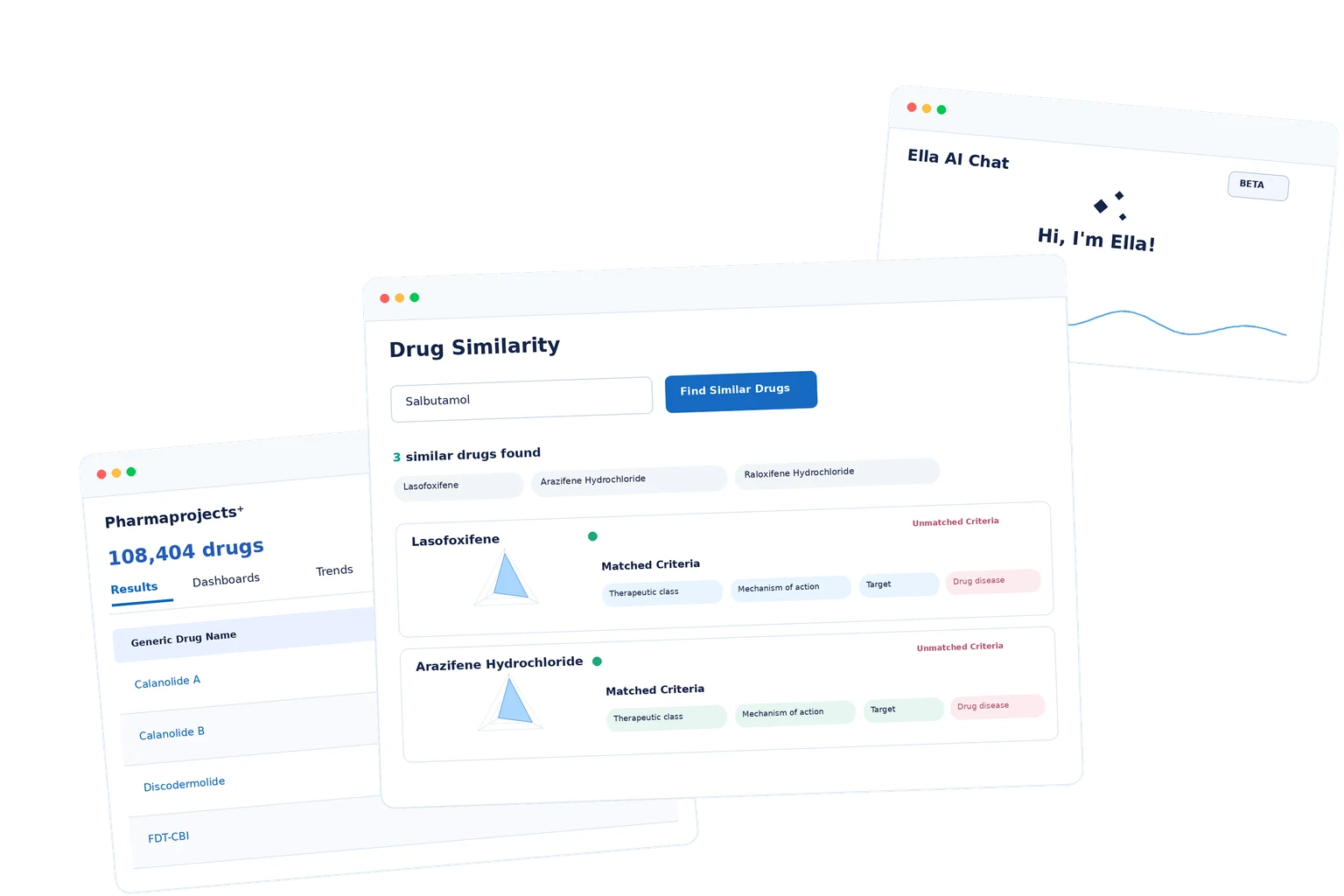
Collage of dashboards featuring Pharmaprojects Plug, Drug Comparison, and Ask Ella.

From pipeline monitoring to portfolio decisions

Clinical Competitive Intelligence gives competitive intelligence, business development, and strategy teams a continuously updated view of global drug R&D. The goal is confident decisions, not just broader coverage.
''

Track the competitive landscape

Follow competitor pipelines across indications, mechanisms, and development stages. 

''

Find gaps and emerging opportunities

Surface underserved indications, emerging mechanisms, and portfolio gaps.

''

Strengthen portfolio decisions

Evaluate opportunities, prioritize investment, and decide where to compete next.
The Clinical Intelligence Platform

Strategic context for every downstream clinical decision

Connect Clinical Competitive Intelligence with the workflows shaping trial design, site selection, and patient recruitment.

Citeline workflow diagram Five workflows around a central Citeline Data & APIs hub. CompetitiveIntelligence ProtocolOptimization SiteSelection Patient Strategy& Recruitment Regulatory& Disclosure CitelineData & APIs Patient Intelligence Agentic Workflows

Clinical Competitive Intelligence

Understand the competitive picture. Identify where to invest and where to compete.

Protocol Optimization & Trial Design

Design protocols real patients can qualify for, grounded in competitive evidence.

Site Selection & Optimization

Place trials where eligible patients and capable sites meet.

Patient Strategy and Recruitment

Reach the right patients at the right moment.

Regulatory & Disclosure

Stay compliant and meet critical reporting obligations.

Why it matters

Decisions made on incomplete competitive data are costly

When teams miss early signals, they pursue crowded indications, under-estimate competition, or discover gaps too late to act. The pipeline has never been more complex, and the stakes for getting it wrong have never been higher.

100,000+
Drug profiles, including failed and withdrawn assets no public source captures
7,700+
Mechanisms fully indexed, alongside 1,100+ targets and 1,700+ diseases
~$500K
Lost in sales every day a trial is delayed by poor early portfolio decisions
40+
Years of curated pipeline history, with annual snapshots dating to 1995
Source: Citeline Pharmaprojects; Tufts Center for the Study of Drug Development.
Clinical Competitive Intelligence in practice

Three things teams do with Clinical Competitive Intelligence

Understand where competitors are investing and how the market is evolving

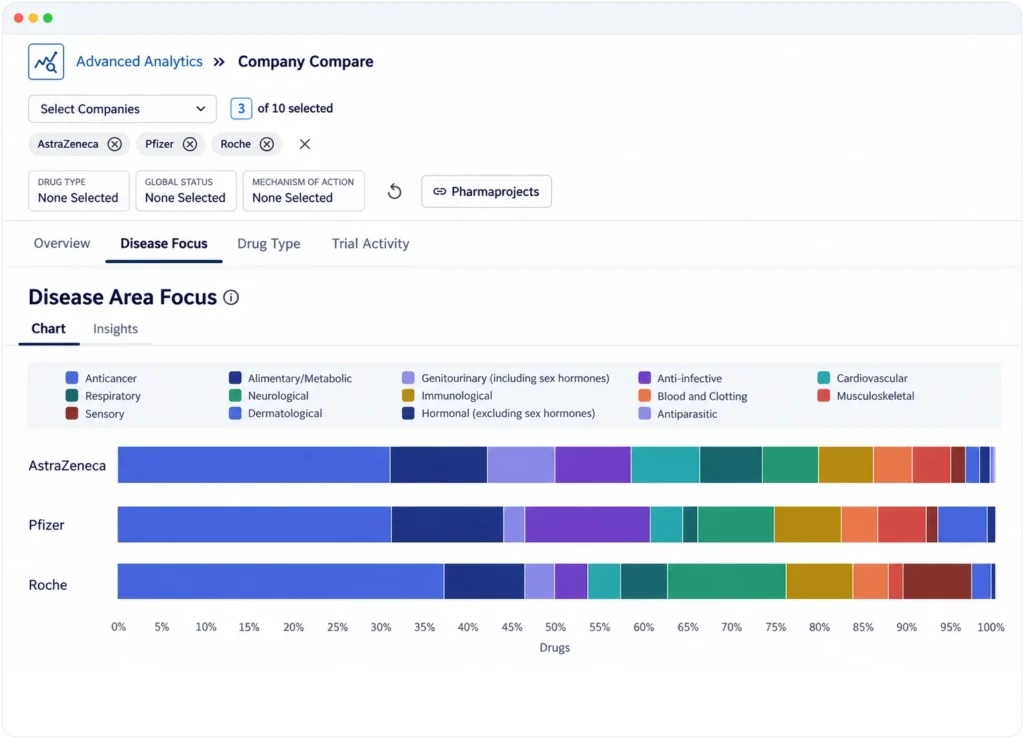
See which companies, therapies, and mechanisms are advancing at every stage. Map the competitive picture across development stages so teams know exactly who is doing what, and where the field is heading.

  • Compare competitor pipelines by disease, phase, and trial activity
  • Track how therapeutic focus has shifted using annual snapshots back to 1995
  • Get alerted when a competitor asset changes status or a new program starts
Preview of the Company Compare feature within Pharmaprojects.

Identify, evaluate, and act on portfolio opportunities

Surface underserved indications and find comparable assets for in-licensing, competitive assessment, and due diligence. Gives BD&L and strategy teams a complete picture of any therapeutic area.

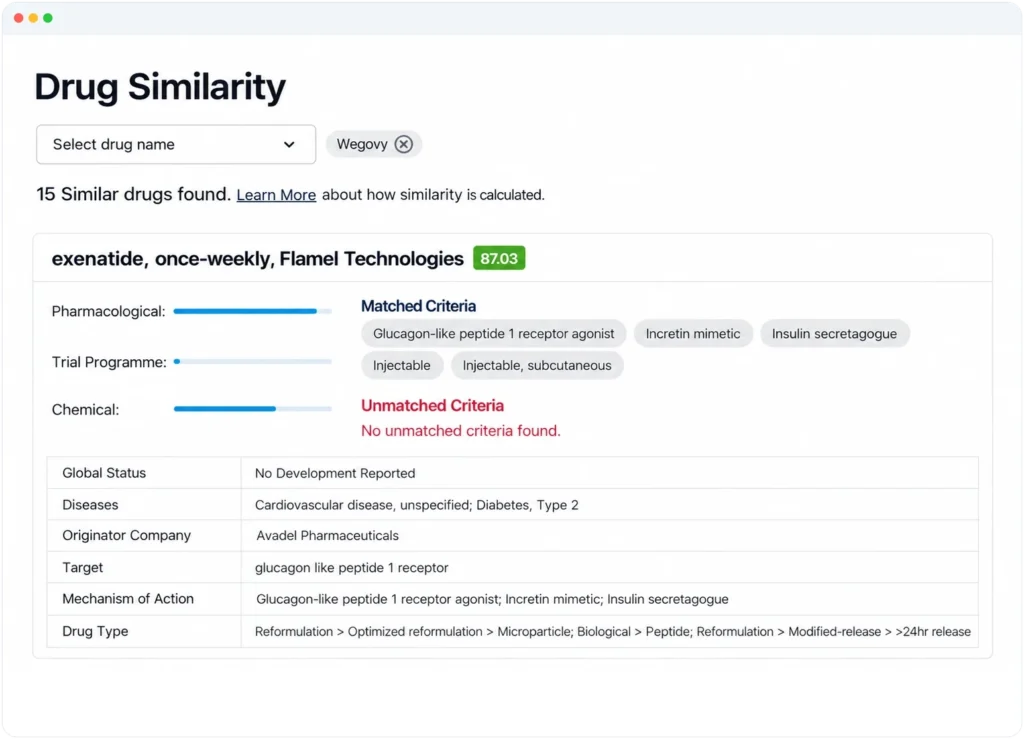
  • Identify comparable assets by chemical, biologic, and mechanistic profile
  • Surface fallen angels and discontinued programs worth revisiting
  • Support due diligence with 100,000+ profiles including failed and withdrawn drugs
Product dashboard showing Drug Similarity results.

Understand how the landscape is changing over time

Phase progression rates, discontinuation patterns, and mechanism saturation all shift. See how the R&D environment has evolved year on year, so teams can ground strategic decisions in decades of evidence rather than assumptions.

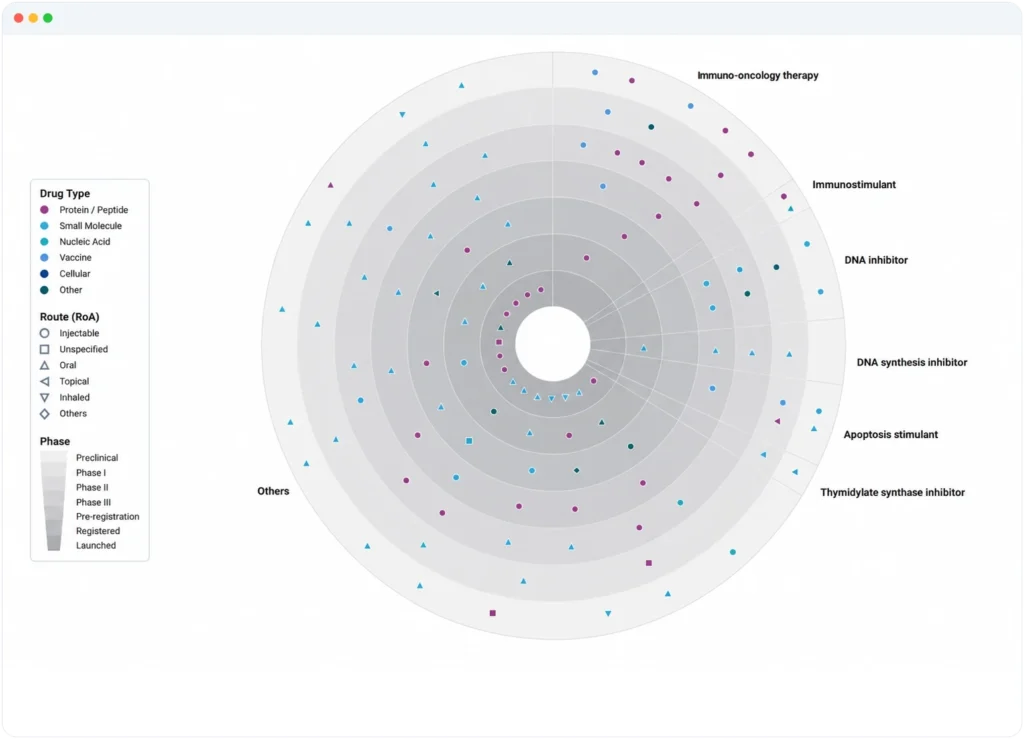
  • Analyze pipeline composition by mechanism, modality, and geography
  • Track R&D trends with annual snapshots since 1995
  • Connect landscape shifts to trial design, site selection, and commercial planning
The data advantage

Intelligence beyond the public record

Public registries capture what companies are required to disclose. Clinical Competitive Intelligence goes further. It tracks what they don’t have to — and has been doing so for over 40 years.

''

Private-company programs

Assets held by companies with no obligation to register publicly. A meaningful share of what's actually in development never appears on CT.gov.

''

Failed and withdrawn assets

100,000+ profiles include drugs that were discontinued, withdrawn, or abandoned. The full history matters for due diligence and understanding mechanism risk.

''

40+ years of institutional knowledge

Annual snapshots since 1995 with continuous expert curation. 58,000+ data sources, enriched by therapeutically aligned analysts.

All records are manually enriched by expert analysts. Nothing is scraped or unvetted. The result is coverage that is both broader and more reliable than any public source — and a picture of the competitive landscape teams can actually make decisions from.
What powers Clinical Competitive Intelligence

The intelligence sources behind the workflow

The workflow brings together pipeline intelligence, advanced analytics, and AI-powered tools in one connected workflow. Here is what sits behind it.

Proof

Built on intelligence teams can rely on

Competitive Intelligence runs on 40+ years of expert-curated pipeline intelligence. The data is built differently from public registries — manually enriched by analysts, not scraped or unvetted.
100,000+
Drug profiles, including failed and withdrawn assets
58,000+
Data sources feeding continuous curation
40+ years

Of curated history

750+

Rare disease pipelines with orphan drug designation tracking

''

Not scraped or unvetted

Every record is manually enriched by expert analysts. Assets are tracked from preclinical discovery through launch, with coverage of private-company programs no public registry reaches.

''

3,700+ mechanisms fully indexed

Filter by target, mechanism, modality, stage, geography, and sponsor. 1,100+ targets and 1,700+ diseases are granularly indexed so teams can build exactly the landscape they need.

''

Connected to Trialtrove and Sitetrove

Pipeline intelligence carries through to trial design benchmarks and site selection without switching platforms. The context from a landscape analysis informs every downstream decision.

How it compares

From pipeline monitoring to portfolio decisions

See competitor moves earlier, access data public registries miss, and connect pipeline intelligence directly to trial and commercial strategy, all in one workflow.
The Traditional Approach With Competitive Intelligence
Pipeline monitoring built from public registries and manual research Continuously curated intelligence across 100,000+ profiles, including private-company and pre-publication records
Identifying comparable assets requires manual search across multiple sources Drug Similarity maps chemical, biologic, and mechanistic comparators in a single search, including discontinued programs
Competitive analysis assembled manually, taking days to build and update Company Compare benchmarks active pipelines by disease, stage, and trial activity in seconds
Understanding how the landscape has shifted requires separate historical research Annual snapshots since 1995 show phase progression rates, discontinuation patterns, and mechanism saturation over time
Pipeline insights rarely reach the teams planning trials and sites Landscape intelligence connects directly to Trialtrove and Sitetrove, so context carries through every downstream decision
Pricing

Speak with our team about how Clinical Competitive Intelligence fits into your commercial strategy

FAQ

Frequently Asked Questions

Clinical Competitive Intelligence is Citeline’s pipeline intelligence workflow for understanding the competitive environment, identifying opportunities, and making more confident portfolio decisions. It gives competitive intelligence, business development, and strategy teams a continuously updated view of global drug R&D, with tools to track competitor activity, assess assets, and connect pipeline signals to downstream clinical planning decisions.

Clinical Competitive Intelligence is built on Pharmaprojects, the industry’s most comprehensive pipeline database. Advanced capabilities including Company Compare, Drug Similarity, Advanced Analytics, and Ella are available through Pharmaprojects+. The workflow connects directly to Trialtrove and Sitetrove for trial design and site selection.

Drug Similarity identifies compounds with comparable chemical, biological, or mechanistic profiles to any reference molecule. BD&L and strategy teams use it to map the competitive set around any asset without starting from scratch, including discontinued programs worth revisiting for in-licensing.
Company Compare lets you benchmark active pipelines side by side, by disease, development stage, and trial activity. It surfaces threats, gaps, and fallen-angel opportunities for BD&L and strategy. Annual snapshots back to 1995 show how therapeutic focus has shifted and where the field is moving next.

Clinical Competitive Intelligence is used by competitive intelligence, business development, medical affairs, and strategy teams at sponsors, CROs, and biotech companies. It’s particularly useful for teams building competitive landscapes, conducting asset due diligence, or monitoring pipeline trends across therapeutic areas.

Ella builds and validates searches, then returns structured, evidence-backed answers drawn from the underlying pipeline data. Every answer is traceable to a source. Teams can ask complex pipeline questions in natural language without manually building filter combinations. Ella also works across Trialtrove and Sitetrove.

Pipeline intelligence from Clinical Competitive Intelligence carries through directly to Trial Design, Site Selection, and Patient Recruitment. The context from a landscape analysis informs protocol benchmarking, country selection, and site strategy without switching platforms.

Get started

Speak to the Clinical team

Tell us what you’re tracking and we’ll show you how Competitive Intelligence can support your competitive intelligence, BD&L, and portfolio planning.


This site is registered on wpml.org as a development site. Switch to a production site key to remove this banner.